Introduction
Taking your dog for a walk while pushing a stroller can be enjoyable, but it can also become stressful when your dog pulls toward distractions, lunges at people or other animals, or repeatedly crosses in front of the wheels. Learning how to train a dog to walk beside a stroller without pulling or lunging takes patience, consistency, and a sensible progression from quiet environments to busier walks.
A stroller changes the normal walking setup. You have one hand occupied, the stroller has moving wheels that can startle a dog, and your dog may become excited by pedestrians, cyclists, children, or other dogs. The goal is not simply to make your dog walk close to the stroller. You want your dog to understand that walking calmly beside it is rewarding and predictable.
Good communication is also important. Understanding body language, attention signals, and changes in your dog’s behaviour can make training much easier. Resources such as Canine & Feline Communication can help owners become more aware of the cues their pets use during everyday interactions.
Why Walking Beside a Stroller Can Be Difficult
For a dog, a stroller is an unusual object. It may be larger than anything normally encountered during walks, it moves differently from a person, and its wheels can make unfamiliar sounds. Some dogs become curious, while others become nervous or overly excited.
Pulling can also become more rewarding when the dog sees something interesting ahead. If your dog has previously reached another dog, person, squirrel, or exciting smell by pulling on the lead, the behaviour may have been unintentionally reinforced.
Lunging has a different cause depending on the individual dog. Excitement, frustration, fear, territorial behaviour, or a strong desire to investigate can all contribute. Before attempting how to train a dog to walk beside a stroller, identify what triggers your dog’s reaction.

A dog that freezes, repeatedly looks away, shows a tense posture, or tries to move away may be uncomfortable rather than simply disobedient. Recognising those signals is part of responsible training.
Prepare Your Dog Before Introducing the Stroller
Strengthen Basic Loose-Lead Walking First
Your dog should ideally understand loose-lead walking before you add a stroller. Begin somewhere familiar and reward your dog for staying near you without tension on the lead.
Instead of waiting until your dog pulls, reward the behaviour you want while it is happening. When your dog walks beside you, calmly offer praise or a small treat. If the lead becomes tight, slow down or change direction rather than dragging your dog forward.
Short sessions are generally more productive than long sessions in which the dog becomes frustrated. A few minutes of focused practice can be enough for one training session.
Teach an Attention Cue
An attention cue such as your dog’s name or a simple “look” command can become extremely useful around a stroller. Practice first in a quiet room, then in the garden, driveway, or another low-distraction location.
Say the cue, wait for your dog to look toward you, and reward immediately. Over time, your dog learns that checking in with you is worthwhile.
This type of communication is particularly valuable when the environment suddenly becomes more stimulating. For additional pet communication information, Naamnuqta offers resources that can help owners better understand animal behaviour and communication cues.
Introduce the Stroller Gradually
One of the biggest mistakes owners make is taking a dog on a busy stroller walk before the dog has had time to become comfortable with the stroller.
Place the stroller somewhere familiar while it is stationary. Allow your dog to investigate it without forcing interaction. Reward calm behaviour around the stroller.
Once your dog is comfortable, move the stroller slowly around the room or yard. Continue rewarding relaxed behaviour. There is no need to make the first session resemble a real walk.
The next stage is walking with the stroller while keeping the environment quiet. Push it for a short distance and reward your dog for remaining beside you.
If your dog becomes nervous or excited, reduce the difficulty. Move farther away from the stroller, stop moving it, or return to an easier exercise. Progress should be based on your dog’s behaviour rather than on a fixed timetable.
How to Train a Dog to Walk Beside a Stroller Step by Step
Start in a Quiet Location
Once your dog accepts the stroller, begin walking in an area with minimal distractions. A quiet driveway, garden, or calm residential street may be more appropriate than a crowded park.
Keep the first walks short. Your objective is to create successful repetitions rather than test your dog’s limits.
Reward your dog whenever it remains near the desired walking position. Use a calm voice and predictable movements so that the stroller does not become associated with tension.
Keep the Lead Position Consistent
Avoid allowing the lead to repeatedly cross in front of the stroller wheels. Depending on your setup and dog’s size, choose a safe walking position that gives your dog enough room without allowing it to move directly into the stroller’s path.
Never wrap the lead around the stroller handle. If you lose control of the stroller, the dog, or both, the situation can become dangerous very quickly.
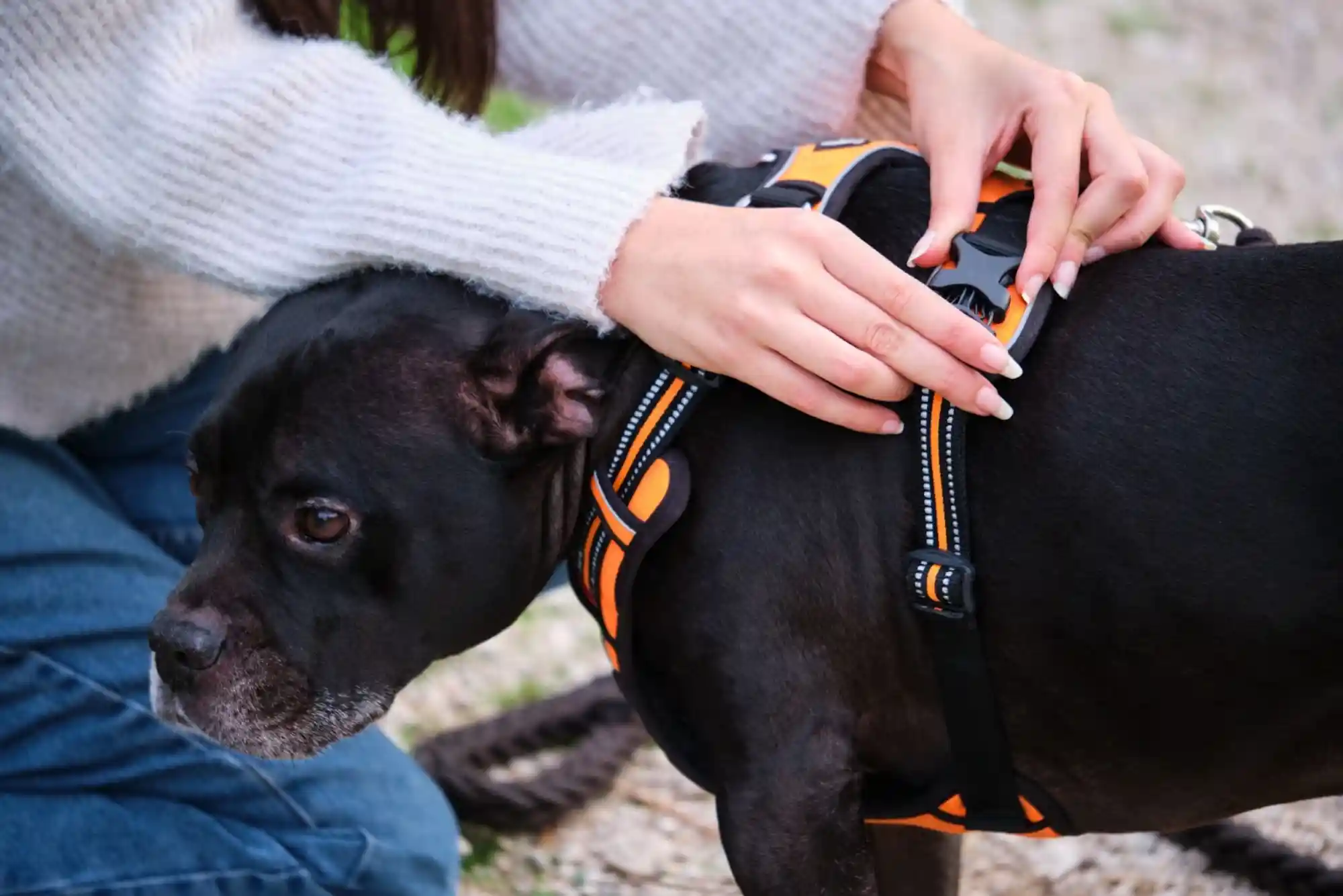
A comfortable, properly fitted harness can provide useful control for many dogs, particularly strong pullers, although equipment should support training rather than replace it.
Reward Calm Walking
Timing matters. If your dog walks calmly beside the stroller for several steps, reward that behaviour while it is happening. You can gradually increase the distance between rewards as your dog becomes more reliable.
The reward does not always have to be food. Some dogs respond well to verbal praise, a brief sniffing opportunity, or a short pause.
The important principle is simple: calm behaviour should consistently produce something your dog values.
How to Stop Pulling During Stroller Walks
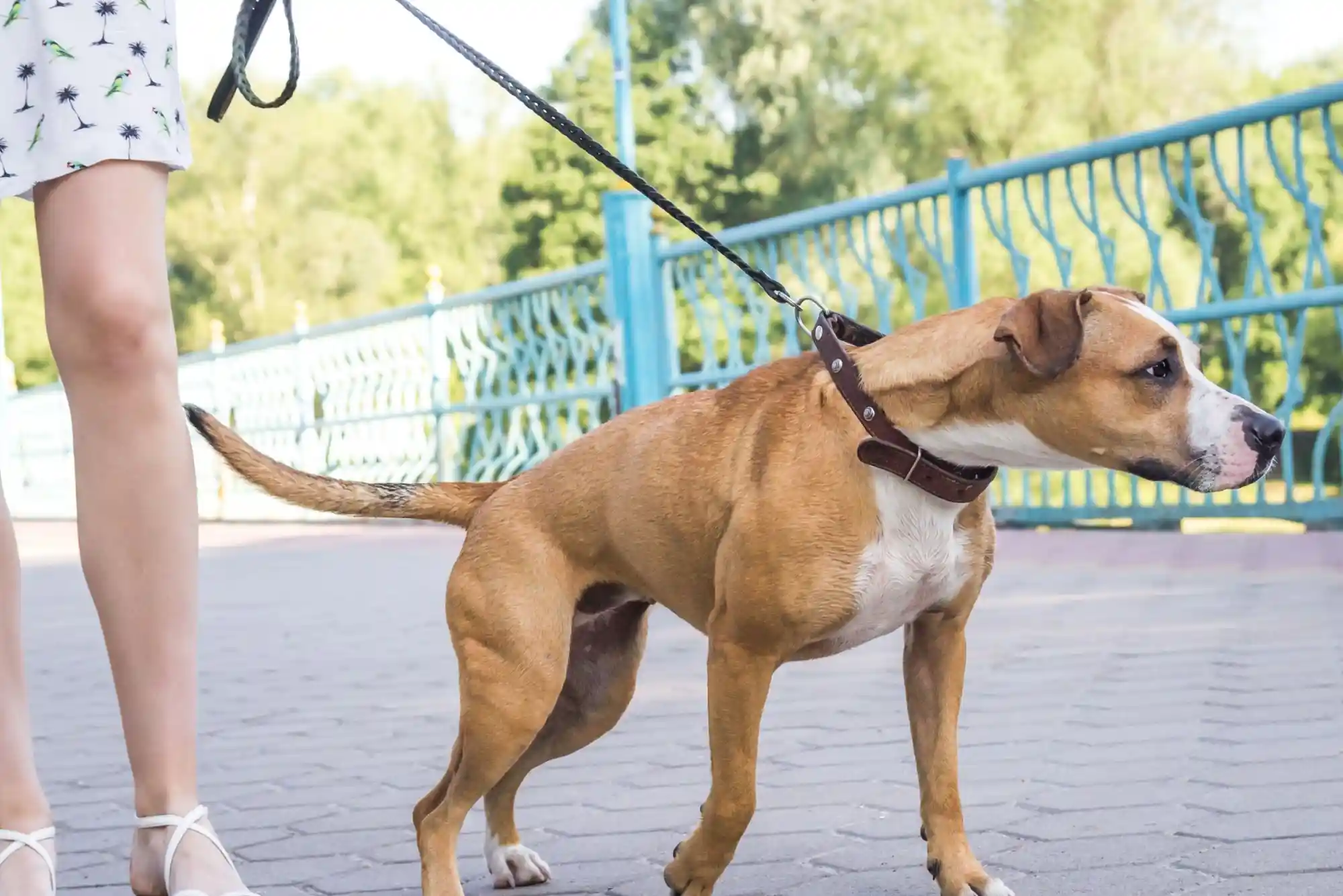
Pulling often gets worse when owners continue moving toward whatever the dog wants. From the dog’s perspective, pulling can therefore become an effective strategy.
When your dog begins pulling, avoid immediately following the direction of the pull. Instead, stop or calmly change direction when it is safe to do so. Wait for your dog to reconnect with you, then continue.
Do not jerk the lead or punish the dog for pulling. Physical corrections can increase anxiety or frustration, especially if the pulling is connected to fear or reactivity.
A useful approach is to reward the moments before pulling begins. If your dog notices a distraction but remains calm and checks in with you, reward that choice.
Over repeated sessions, your dog can learn that staying connected to you is more rewarding than charging toward distractions.
How to Prevent Lunging Beside a Stroller
Lunging requires additional attention because it can create a safety problem when a stroller is involved.
Identify Your Dog’s Triggers
Watch for the situations that cause lunging. Your dog may react to unfamiliar dogs, fast-moving bicycles, children, vehicles, runners, or particular sounds.
Once you know the triggers, you can manage the distance between your dog and the distraction. Distance is one of the most useful tools in behaviour training.
Work Below Your Dog’s Reaction Threshold
If your dog is already barking, lunging, or completely fixated on a trigger, learning becomes much harder. Instead, begin far enough away that your dog can notice the distraction without losing control.
When your dog sees the trigger and remains calm, reward it. Gradually work closer over multiple sessions.
There is no benefit in forcing a dog to remain beside a stroller while it is overwhelmed. If necessary, turn away and create more distance.
Have an Emergency Direction Change
Practice a simple “this way” cue without the stroller first. When you say it, calmly turn and encourage your dog to follow.
After the behaviour is reliable, practice it while pushing an empty stroller. Eventually, you can use the cue during real walks when you need to move away from an approaching distraction.
This gives you a practical safety behaviour instead of relying on physical restraint.
Make Stroller Training Progressively More Challenging
Once your dog can walk calmly beside the stroller in a quiet area, gradually introduce more realistic conditions.
You might first add mild environmental distractions, followed by slightly busier streets, wider paths, or distant dogs. Eventually, you can practise around normal pedestrian activity.
Change only one major factor at a time whenever possible. If you suddenly introduce crowds, bicycles, unfamiliar dogs, traffic, and a long walk, it becomes difficult to determine what caused a setback.
The same principle applies to duration. A dog that can walk calmly for ten minutes does not automatically have the skills to manage an hour-long outing.
For general guidance on safe dog walking and responsible handling, owners can also review AKC Stroller Walking Guidelines.
Common Mistakes to Avoid
Moving Too Quickly
If your dog struggles around the stroller, going straight to a busy public area can create unnecessary stress. Slow progression usually produces better long-term results.
Rewarding Pulling Without Realising It
If your dog pulls and you continue toward an interesting object, the dog may learn that pulling works. Pay attention to what happens immediately after the behaviour.
Using Punishment for Lunging
Lunging can be caused by fear, frustration, or excitement. Punishment may suppress an outward behaviour without addressing the underlying emotion. Calm management and reward-based training are generally more appropriate starting points.
Ignoring Your Dog’s Body Language
A dog that appears quiet is not necessarily relaxed. Look at the whole body, including posture, facial expression, ears, tail, movement, and ability to take food.
If your dog repeatedly reacts intensely to triggers, consider working with a qualified reward-based trainer or veterinary behaviour professional.
Safety Tips for Stroller Walks
Safety should come before perfect obedience. Make sure your dog’s harness or collar fits correctly and that the lead is secure. Keep the dog away from the stroller’s wheels and never allow the lead to become entangled with the stroller.
Choose walking routes that give you room to create distance from other dogs, cyclists, or pedestrians. Avoid crowded areas until your dog’s skills are dependable.
It is also wise to consider weather and surface conditions. Hot pavement can be uncomfortable or dangerous for dogs, while extreme temperatures can make longer walks inappropriate.
Most importantly, never assume that a well-trained dog will behave perfectly in every situation. Stroller walking combines several moving elements, so staying alert is essential.
How Long Does Stroller Training Take?
There is no universal training timeline. A confident dog with strong loose-lead skills may adapt relatively quickly, while a nervous or reactive dog may need weeks or longer.
Consistency matters more than speed. Five calm practice sessions can be more useful than one difficult outing that pushes the dog beyond its ability to cope.
Keep a simple mental record of what works. Notice the distance at which your dog remains calm, which distractions cause difficulty, and how quickly your dog recovers after becoming excited.
Progress is often easier to see when you compare today’s behaviour with last week’s rather than expecting improvement during every single walk.
Build Calm, Confident Stroller Walks
Learning how to train a dog to walk beside a stroller without pulling or lunging is less about controlling every movement and more about teaching your dog what to do instead. Start with loose-lead skills, introduce the stroller gradually, reward calm behaviour, identify triggers, and increase distractions at a manageable pace.
Your dog does not need to become perfect overnight. Consistent practice can turn the stroller from an unfamiliar distraction into an ordinary part of the walking routine.
FAQS
How do I get my dog to stop pulling when walking?
Start by practising loose-lead walking in a low-distraction environment. Reward your dog for staying near you and stop or change direction when the lead becomes tight. Gradually introduce distractions as your dog improves.
How do I get my dog used to a stroller?
Introduce the stroller while it is stationary and allow your dog to investigate it at its own pace. Then practise moving it slowly before combining it with short outdoor walks.
Why does my dog lunge at other dogs while walking?
Lunging can result from excitement, frustration, fear, or reactivity. Identifying the underlying trigger and maintaining enough distance for your dog to remain calm can make training more effective.
How do I stop my dog from pulling toward other dogs?
Work at a distance where your dog can see another dog without reacting. Reward calm observation and attention toward you, then gradually decrease the distance as your dog’s behaviour becomes more reliable.
Can you train an older dog to stop pulling?
Yes. Older dogs can learn new walking habits, although progress may depend on their previous training, temperament, physical comfort, and established behaviours. Short, consistent sessions are often helpful.
Should I use a harness for a dog that pulls?
A properly fitted harness can provide useful management and may be preferable for some dogs, but it does not automatically teach loose-lead walking. Training remains an important part of reducing pulling.