Introduction
Learning how to train a dog to walk beside a stroller can make daily outings safer, calmer, and much more enjoyable. A stroller changes the walking environment: it is larger than a person, has moving wheels, makes unfamiliar sounds, and can restrict how quickly you respond to your dog. A dog that normally walks politely may suddenly pull toward the stroller, weave in front of it, bark at passing people, or lunge at another dog.
The good news is that these behaviours can usually be improved through gradual training, clear communication, and consistent rewards. The goal is not simply to stop your dog from pulling. You want your dog to learn that staying near you and walking calmly beside the stroller is rewarding and predictable.
Understanding your dog’s body language is also important. Resources such as Canine & Feline Communication can help owners become more aware of subtle communication cues that often appear before a dog reacts.
Why Training a Dog to Walk Beside a Stroller Matters
A stroller introduces several challenges that are not present during an ordinary walk. The wheels may move close to your dog’s paws, the stroller can block part of your view, and your attention may naturally be divided between your dog and the child.
If your dog pulls toward something while you are pushing a stroller, regaining control can be more difficult. Lunging can also cause the leash to cross in front of the stroller or create a tripping hazard.
Training gives your dog a reliable walking routine. Instead of reacting impulsively to distractions, your dog learns to check in with you, maintain a comfortable position, and respond to familiar cues.

This is especially valuable for strong, excitable, young, or easily distracted dogs. A calm walking pattern does not happen automatically; it needs to be taught and practised.
Prepare Before You Introduce the Stroller
Before learning how to train a dog to walk beside a stroller outdoors, make the stroller a familiar object at home.
Let Your Dog Investigate the Stroller
Place the stroller somewhere your dog can see it without being forced to approach. Allow your dog to sniff it and investigate at their own pace.
Reward calm behaviour with treats, praise, or another reward your dog genuinely values. Avoid pushing the stroller toward your dog or using it to surprise them.
The objective is to change the meaning of the stroller from something unusual into something predictable.
Practise Around a Stationary Stroller
Once your dog is comfortable near the stroller, practise basic behaviours while it remains still. Ask for simple cues such as walking beside you, stopping, sitting, and looking at you.
Keep these sessions short. A few successful minutes are more useful than a long session in which your dog becomes frustrated or overstimulated.
Move the Stroller Gradually
When your dog is relaxed around a stationary stroller, begin moving it slowly. Push it a short distance, stop, reward calm behaviour, and repeat.
Watch your dog’s body language. If the dog becomes tense, stares at the wheels, starts pulling, or repeatedly tries to move away, increase the distance and make the exercise easier.
Teach Loose-Leash Walking First
A dog that already understands loose-leash walking will generally have an easier time walking beside a stroller.
Reward the Position You Want
Choose a comfortable position beside the stroller and consistently reward your dog for staying there.
Rather than waiting until your dog pulls before responding, reward frequently while the leash is loose. This helps your dog understand exactly what earns reinforcement.
You can gradually reduce the frequency of treats as the behaviour becomes reliable.
Use a Consistent Walking Cue
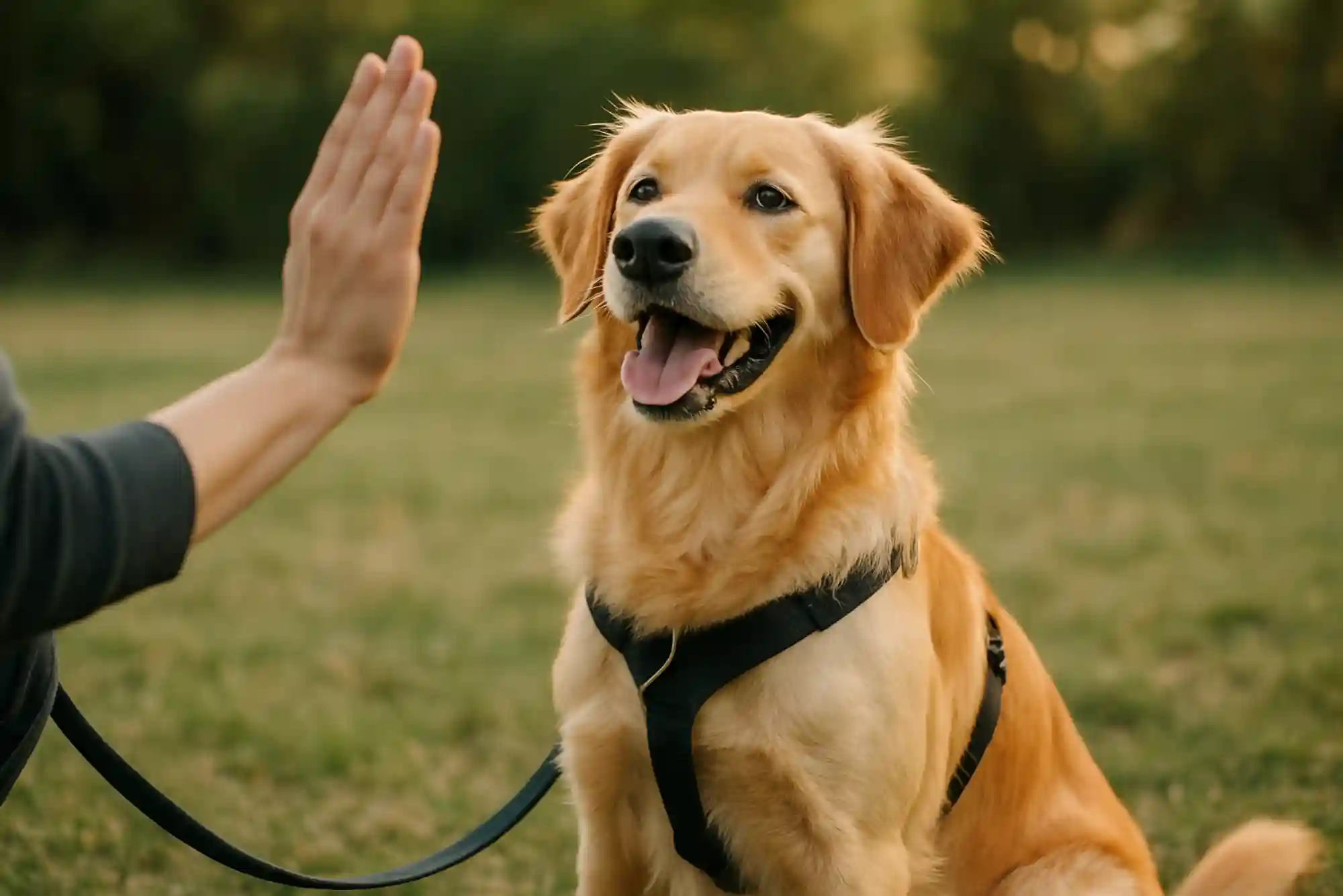
Choose a simple verbal cue such as “with me” or “let’s walk.” Say it calmly and use it consistently.
When your dog moves into the desired position, reward them. Over time, the cue becomes associated with walking calmly beside you.
Consistency matters more than the particular word you choose.
How to Train a Dog to Walk Beside a Stroller Step by Step
Once your dog understands loose-leash walking, combine the skill with the stroller.
Start in a Quiet Location
Begin somewhere with minimal traffic, few pedestrians, and limited dog distractions. A quiet driveway, garden, or low-traffic path may be more appropriate than a busy park.
Walk slowly and keep the first sessions brief.
Your dog is learning several things at once: where to walk, how close to stay to the stroller, how to respond to your cues, and how to ignore the movement of the wheels.
Reward Calm Walking Frequently
At the beginning, reward your dog every few steps if necessary. You are building a habit, not testing obedience.
As your dog becomes more reliable, gradually increase the number of steps between rewards.
You can also use life rewards. For example, calmly walking beside the stroller can earn your dog permission to sniff a suitable area. This makes good behaviour useful and meaningful rather than simply restrictive.
Practise Stopping and Starting
A stroller walk requires frequent changes in pace. You may need to stop at a crossing, slow down around pedestrians, or pause when your child needs attention.
Teach your dog that stopping is normal.
Walk a few steps, stop, wait for your dog to remain calm, then continue. Practising these transitions in easy environments prepares your dog for real-world situations.
Prevent Pulling Before It Becomes a Problem
Preventing pulling is easier than repeatedly correcting it after your dog has reached the end of the leash.
Pay attention to early signs of excitement. Your dog may suddenly increase speed, stiffen their body, fix their gaze on another dog, raise their head, or stop responding to their name.
These signs tell you that your dog may be approaching their reaction threshold.
Instead of waiting for a lunge, create distance and redirect attention. This is one of the most important principles when learning how to train a dog to walk beside a stroller.
For additional general guidance on preventing pulling, you can also explore Whole Dog Journal Pulling Prevention.
How to Stop Lunging During Stroller Walks
Lunging is different from ordinary leash pulling because it may involve a strong emotional reaction to a person, dog, bicycle, vehicle, or another trigger.
Identify Your Dog’s Triggers
Observe what causes your dog to react. Some dogs lunge at other dogs, while others react to cyclists, children, cars, squirrels, or unfamiliar objects.
Knowing the trigger allows you to plan ahead.
Increase Distance
Distance is one of your best training tools. If your dog reacts when another dog is 10 feet away, training at five feet is unlikely to be productive.
Move farther away until your dog can notice the trigger without losing control.
At that distance, reward calm behaviour and attention toward you.
Do Not Force Close Encounters
There is no benefit to deliberately walking your dog close to a trigger to “get them used to it.” If your dog repeatedly rehearses lunging, the behaviour can become stronger.
Instead, work below the dog’s reaction threshold and gradually decrease distance as the dog becomes more comfortable.
Teach Your Dog to Check In With You
A reliable check-in can be extremely useful when pushing a stroller.
Practise at home first. Say your dog’s name. When they look toward you, reward them. Repeat in different rooms and then in quiet outdoor environments.
Eventually, your dog can learn to look toward you when something interesting appears.
This simple behaviour gives you a way to redirect attention before your dog begins pulling or lunging.
Use the Right Equipment
Equipment cannot replace training, but appropriate equipment can make training safer and easier.
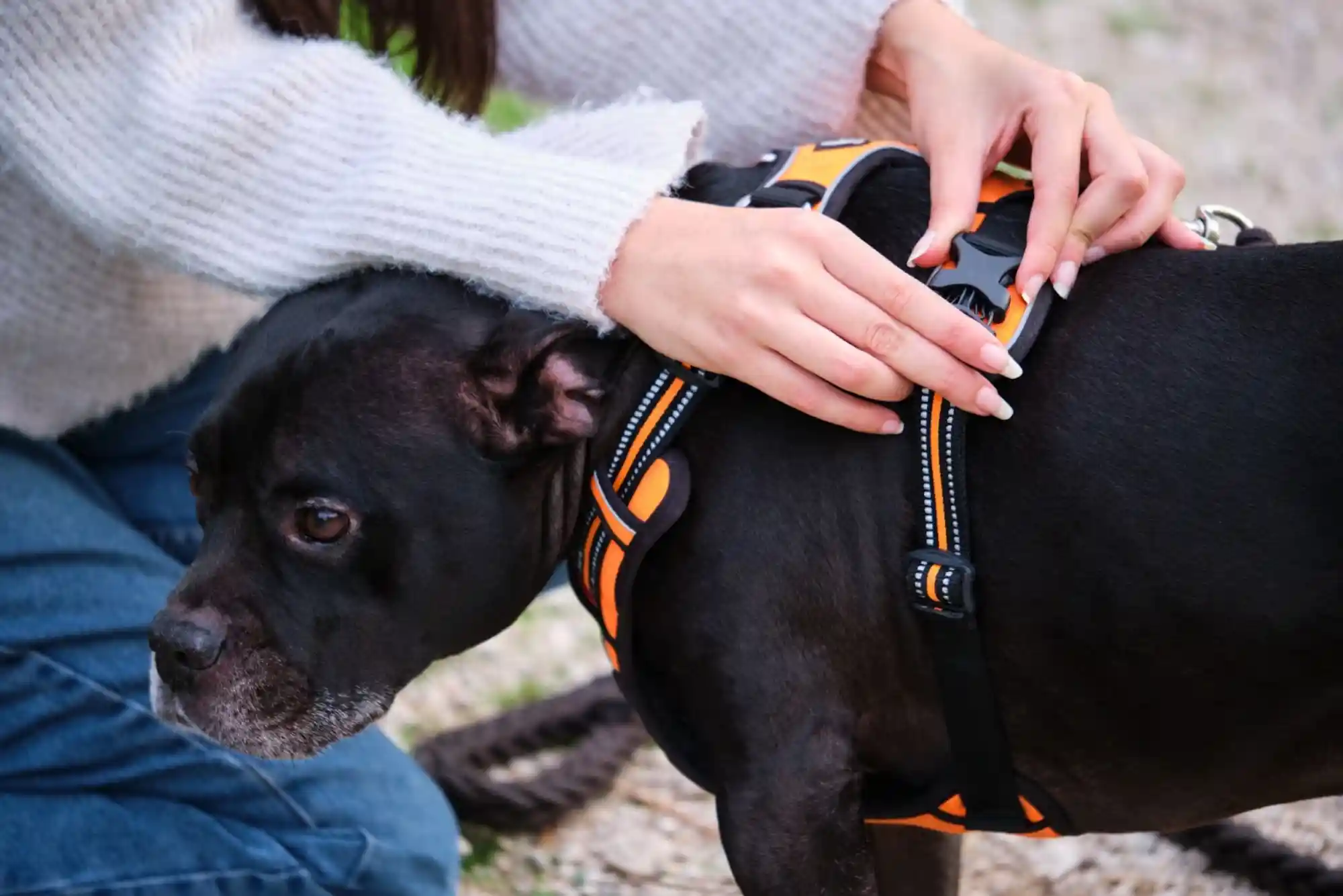
A properly fitted harness may give you better control while reducing pressure on the neck. Choose equipment that fits securely without restricting normal movement.
Avoid equipment that causes pain or fear as a primary training strategy. The aim is to teach your dog what to do, rather than relying on discomfort to suppress unwanted behaviour.
The leash should also provide enough room for your dog to walk comfortably without creating a large loop that could become tangled around stroller wheels.
Make Stroller Training Gradually More Difficult
Once your dog can walk calmly beside the stroller in a quiet location, introduce distractions one at a time.
You might gradually practise around more pedestrians, mild traffic, different surfaces, gentle changes in pace, and eventually other dogs at a safe distance.
Do not increase every difficulty simultaneously.
If you add a busy environment, keep the walking duration short. If you introduce a major distraction, return to a familiar location. This makes it easier to determine what your dog can handle.
A useful principle is to make progress in small steps rather than expecting your dog to master the entire situation in one outing.
What to Do If Your Dog Starts Pulling
If the leash suddenly becomes tight, avoid accelerating to match your dog’s pace.
Instead, calmly slow down or stop and wait for your dog to reconnect with you. Once the leash is loose and your dog is calm, continue.
If the dog is pulling toward a trigger, simply stopping may not be enough. Create more distance if necessary.
Avoid repeatedly jerking the leash or shouting. Those responses can increase excitement and make the stroller walk more stressful.
Common Mistakes to Avoid
One common mistake is introducing the stroller and immediately taking the dog on a long, busy walk. This gives the dog little opportunity to learn the new routine gradually.
Another mistake is rewarding only perfect behaviour. Early training should reinforce small successes, such as walking several calm steps, looking at you, or remaining relaxed when the stroller starts moving.
Owners also sometimes focus exclusively on stopping pulling instead of teaching an alternative behaviour. Your dog needs to understand what you want: a loose leash, a particular walking position, or attention toward you.
Finally, avoid rushing progression. A dog that performs beautifully in a quiet driveway may struggle dramatically on a crowded pavement. That does not mean the training has failed. It means the environment is currently too difficult.
Safety Tips for Stroller Walks
Safety should always come before training progress.
Keep the leash away from the stroller wheels and never wrap it around the stroller handle in a way that could interfere with your ability to release or control it.
Avoid retractable leads in situations where precise leash management is important. A standard leash often makes it easier to maintain a consistent distance.
If your dog becomes highly reactive, stop the stroller somewhere safe and create distance from the trigger. Do not continue simply because you planned to complete a particular route.
For dogs with a history of serious aggression or uncontrollable lunging, consider working with a qualified reward-based trainer or veterinary behaviour professional before attempting challenging stroller walks.
How Long Does Stroller Training Take?
There is no universal timeline. A dog with strong loose-leash skills may become comfortable with the stroller relatively quickly, while a reactive or highly excitable dog may require weeks or months of gradual practice.
Consistency is more important than speed.
Short sessions several times a week can be more productive than occasional long walks. End training while your dog is still successful rather than waiting until they become exhausted or overwhelmed.
The aim is reliable behaviour in real-life situations, not simply a perfect performance during a training session.
Building Better Communication With Your Dog
Successful stroller walking depends on communication. Your dog needs to understand your cues, while you need to recognise changes in your dog’s emotional state.
Learning more about canine communication can help you notice when your dog is becoming uncomfortable before pulling or lunging occurs. For broader pet behaviour and communication resources, visit Naamnuqta.
When you recognise early signals, you can adjust distance, change direction, slow down, or offer a reward before the situation escalates.
That proactive approach is usually far more effective than waiting for a full reaction.
Make Calm Stroller Walking a Habit
Learning how to train a dog to walk beside a stroller is ultimately about creating a predictable routine. Introduce the stroller gradually, teach loose-leash walking, reward calm behaviour, practise attention cues, manage distance from triggers, and increase distractions slowly.
Do not measure success by how quickly your dog can handle a crowded street. Measure it by whether your dog is becoming calmer, more responsive, and more confident around the stroller.
Start with a few quiet minutes today, reward the behaviour you want, and build from there. With patient, consistent practice, stroller walks can become a safe and enjoyable part of your dog’s everyday routine.
Ready to start? Begin with a stationary stroller, practise calm behaviour, and take the first short walk only when your dog is comfortable with the basics.
FAQs
How do I get my dog to stop pulling when walking?
Teach loose-leash walking by rewarding your dog whenever they walk beside you with a relaxed leash. Start in a low-distraction environment and gradually introduce more challenging situations.
How do I train my dog to walk nicely beside me?
Choose a consistent walking position, use a simple cue, and reward your dog for staying near you. Practise in short sessions and gradually increase distractions.
Why does my dog lunge at other dogs while on a leash?
Lunging can result from excitement, frustration, fear, or a desire to approach another dog. Identify the trigger and maintain enough distance for your dog to remain responsive to you.
Should I use a harness to stop my dog from pulling?
A properly fitted harness can improve handling and comfort, but it does not automatically teach loose-leash walking. Training and reinforcement are still necessary.
How can I safely walk my dog and push a stroller?
Train the dog separately before combining the skills. Use a secure, well-fitted harness and standard leash, maintain control of the leash around the wheels, and practise first in quiet areas.
Can an older dog learn to walk beside a stroller?
Yes. Older dogs can learn new walking habits, although the pace of training should account for their physical ability, experience, and temperament. Short, positive sessions are usually the best starting point.
Related Reading: How to Train a Dog to Walk Beside a Stroller Without Pulling or Lunging