Introduction
Puppy biting can turn an enjoyable walk into a frustrating experience. Your puppy may suddenly grab your trousers, chase your feet, or bite your ankles whenever you start moving. Although this behavior can feel aggressive, it is often a normal part of puppy development.
Understanding how to stop a puppy from biting ankles and pant legs during walks starts with identifying the reason behind the behavior. Puppies explore their surroundings through their mouths. They also experience teething discomfort, excitement, and strong chasing instincts.
However, normal puppy behavior still requires appropriate guidance. Without consistent training, ankle biting can become a difficult habit. Fortunately, patience, positive reinforcement, and suitable walking techniques can help your puppy learn better manners.
Why Do Puppies Bite Ankles and Pant Legs During Walks?
Understanding your puppy’s motivation makes training more effective. Different triggers require slightly different responses.
Excitement and Playfulness
Moving feet and swinging trousers can look like exciting toys to young puppies. When you walk away, your puppy may chase your ankles and grab your clothing. This behavior often increases when puppies become overstimulated.
Teething Discomfort
Puppies experience teething during their early months. Chewing helps relieve discomfort and satisfies their natural urge to bite. Unfortunately, moving pant legs may become an easy target when appropriate chew toys are unavailable.

Herding and Chasing Instincts
Some breeds have stronger chasing or herding tendencies. Border Collies, Australian Shepherds, and similar breeds may instinctively chase moving feet. Nevertheless, puppies from any breed can develop this behavior.
Overtiredness and Frustration
Ankle biting sometimes signals that your puppy needs rest. Young dogs can become increasingly mouthy when tired, hungry, or overstimulated. Long walks and excessive excitement may make the problem worse.
Recognizing these triggers helps you respond calmly instead of treating every bite as deliberate disobedience.
How to Stop a Puppy from Biting Ankles and Pant Legs During Walks
The most effective approach combines prevention, redirection, and rewarding calm behavior. Your puppy needs to learn what to do instead of biting your clothing.
Stop Moving When Biting Starts
When your puppy grabs your pant leg, stop walking immediately. Keep your feet still and avoid pulling your clothing away. Pulling can turn the interaction into an exciting tugging game.
Wait briefly for your puppy to release the fabric. Once the puppy lets go, calmly redirect attention toward a suitable toy or treat.
If your puppy continues biting, create some distance using a barrier or step behind a gate when practical. Resume walking only when your puppy is calmer.
Avoid shouting, kicking, or jerking the leash. These reactions can increase excitement, frighten your puppy, or accidentally reward the behavior with attention.
Redirect Biting Toward Appropriate Toys
Redirection teaches puppies which objects are acceptable to bite. Carry a lightweight tug toy or another suitable puppy toy during walks.
When you notice your puppy becoming interested in your ankles, present the toy before biting begins. Encourage your puppy to grab it instead of your trousers.
Reward your puppy with praise when they engage with the toy. This creates a positive association between appropriate play and good walking behavior.
If biting starts suddenly, pause first and redirect afterward. Otherwise, your puppy might learn that biting your clothing always produces an exciting toy.
Reward Calm Walking
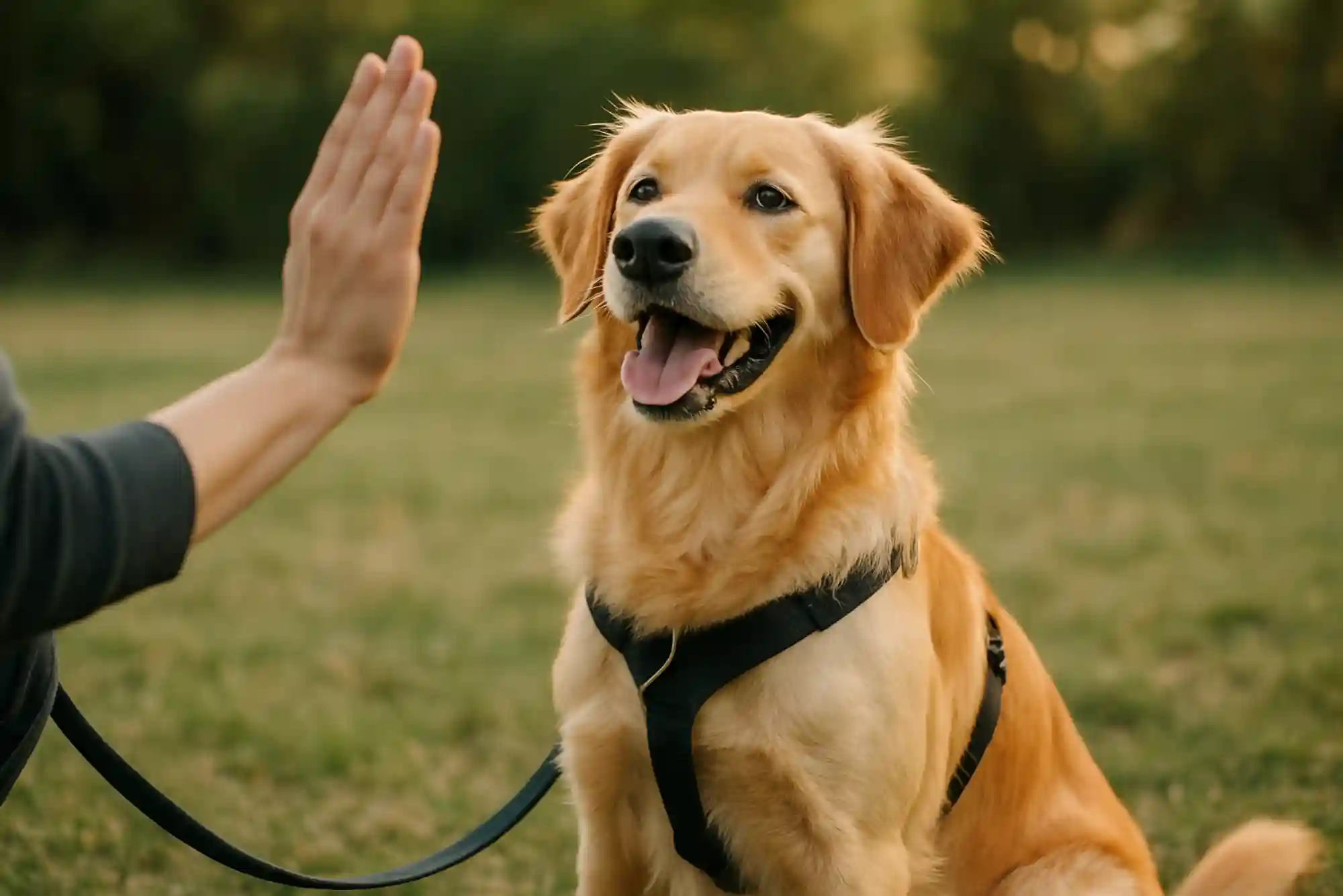
Positive reinforcement helps puppies understand which behaviors earn rewards. Carry small, puppy-safe treats and reward your dog for walking beside you without grabbing your clothing.
Initially, offer rewards after just a few successful steps. As your puppy improves, gradually increase the distance between rewards.
Use a consistent verbal cue, such as “let’s walk,” before moving forward. Praise your puppy whenever they follow you calmly.
Keep training sessions short and manageable. Frequent success is more valuable than expecting a young puppy to complete a long, perfect walk.
Teach Your Puppy to Focus on You
Attention training can reduce ankle biting by giving your puppy something more rewarding to do. Begin indoors, where distractions are limited.
Say your puppy’s name once and reward them when they look toward you. Gradually practice in your garden, driveway, and quieter outdoor areas.
During walks, reward voluntary eye contact and check-ins. If your puppy becomes distracted by moving trousers, use the familiar attention cue before excitement escalates.
Avoid repeatedly calling your puppy when they are too excited to respond. Instead, increase distance from distractions and make the exercise easier.
Use Short Walks and Frequent Breaks
Young puppies have limited attention spans and physical endurance. Long walks can lead to frustration, exhaustion, and excessive mouthing.
Choose short outings that suit your puppy’s age, health, and vaccination guidance. Allow opportunities for sniffing, toileting, and exploring safely.
When your puppy begins biting repeatedly, consider whether they need a break rather than more exercise. Return to a quiet environment and provide water, rest, or an appropriate chew.
A balanced routine should include sleep, gentle play, mental stimulation, and age-appropriate movement.
What Should You Do When Your Puppy Bites Your Pants Repeatedly?
Repeated ankle biting can feel difficult to manage, especially when your puppy becomes excited outdoors. A predictable response helps prevent the behavior from turning into a game.
First, stop moving and remain calm. Avoid dragging your puppy along or using your trousers to pull them away.
Next, encourage your puppy to release the fabric by offering a suitable toy or using a previously trained cue. Reward the release and any calm behavior that follows.
If your puppy cannot disengage, calmly end the walking session when it is safe to do so. Move to a quiet area or return home without turning the interaction into a chase.
Afterward, consider what happened immediately before the biting started. Your puppy might have become overtired, frustrated by the leash, or overwhelmed by outdoor distractions.
Adjusting the next walk can prevent another episode. For example, choose a quieter route, shorten the outing, or carry a toy for early redirection.
Never punish your puppy for growling or other warning signals. These behaviors provide important information about discomfort or stress. If biting appears fearful, intense, or unusually persistent, seek professional guidance.
Common Mistakes That Make Puppy Ankle Biting Worse
Some everyday reactions unintentionally encourage puppies to continue biting.
Chasing your puppy, waving your feet, or pulling your trousers away can make the interaction more exciting. Similarly, shouting may increase arousal rather than teach calm behavior.
Another mistake is expecting immediate improvement. Puppies need repeated opportunities to practice appropriate behavior before it becomes reliable.
Inconsistent responses can also confuse your dog. If biting sometimes starts a game but sometimes ends the walk, your puppy may continue experimenting.
Instead, respond predictably, reward desirable alternatives, and manage situations that trigger biting. Everyone who walks the puppy should follow the same approach.
Avoid harsh physical corrections, leash jerks, or methods that cause fear. Humane training builds trust and supports better long-term learning.
How Long Does It Take to Stop Puppy Biting During Walks?
Progress depends on your puppy’s age, temperament, previous experiences, and the reasons behind the biting. Some puppies improve within days of consistent training, while others need several weeks or longer.
You may notice early improvements when your puppy starts releasing clothing faster or responding to redirection. Over time, successful walks should become more frequent.
However, occasional setbacks are normal, especially during teething or exciting developmental stages. Continue rewarding calm walking rather than expecting flawless behavior every time.
If the biting remains severe, causes injuries, or does not improve with careful training, consult a qualified reward-based trainer. A veterinarian can also check for pain or other factors affecting your puppy’s behavior.
Frequently Asked Questions
Why does my puppy bite my ankles when I walk?
Puppies often bite ankles because moving feet trigger play, chasing instincts, or excitement. Teething discomfort, frustration, and tiredness can also contribute. Identifying the trigger helps you choose the most effective training response.
How do I stop my puppy from biting my pants on walks?
Stop moving when biting begins, avoid pulling the fabric, and calmly redirect your puppy toward an appropriate toy. Reward calm walking and practice in quieter environments before introducing more distractions.
Should I ignore my puppy when it bites my legs?
Briefly removing movement and attention can help when your puppy is seeking play. However, ignoring biting is not always sufficient. Combine a calm pause with redirection, positive reinforcement, and appropriate management.
Does puppy ankle biting mean aggression?
Not necessarily. Many puppies bite ankles because of playfulness, excitement, or chasing instincts. However, stiff body language, intense fear, repeated hard bites, or escalating behavior warrant professional assessment.
At what age do puppies stop biting ankles?
Ankle biting often decreases as puppies mature and learn appropriate behavior. Teething commonly occurs during the first several months, but individual development varies. Consistent training and adequate rest can help reduce the habit sooner.
What should I do if my puppy bites my legs and will not let go?
Remain calm, stop moving, and avoid pulling or shouting. If safe, encourage your puppy to release the clothing using a familiar cue or suitable toy. Create distance without escalating the interaction, and seek professional help if the behavior is intense or causes injury.
Conclusion
Learning how to stop a puppy from biting ankles and pant legs during walks requires patience, consistency, and an understanding of your puppy’s needs. The goal is not simply to prevent biting but to teach a safer, more appropriate alternative.