
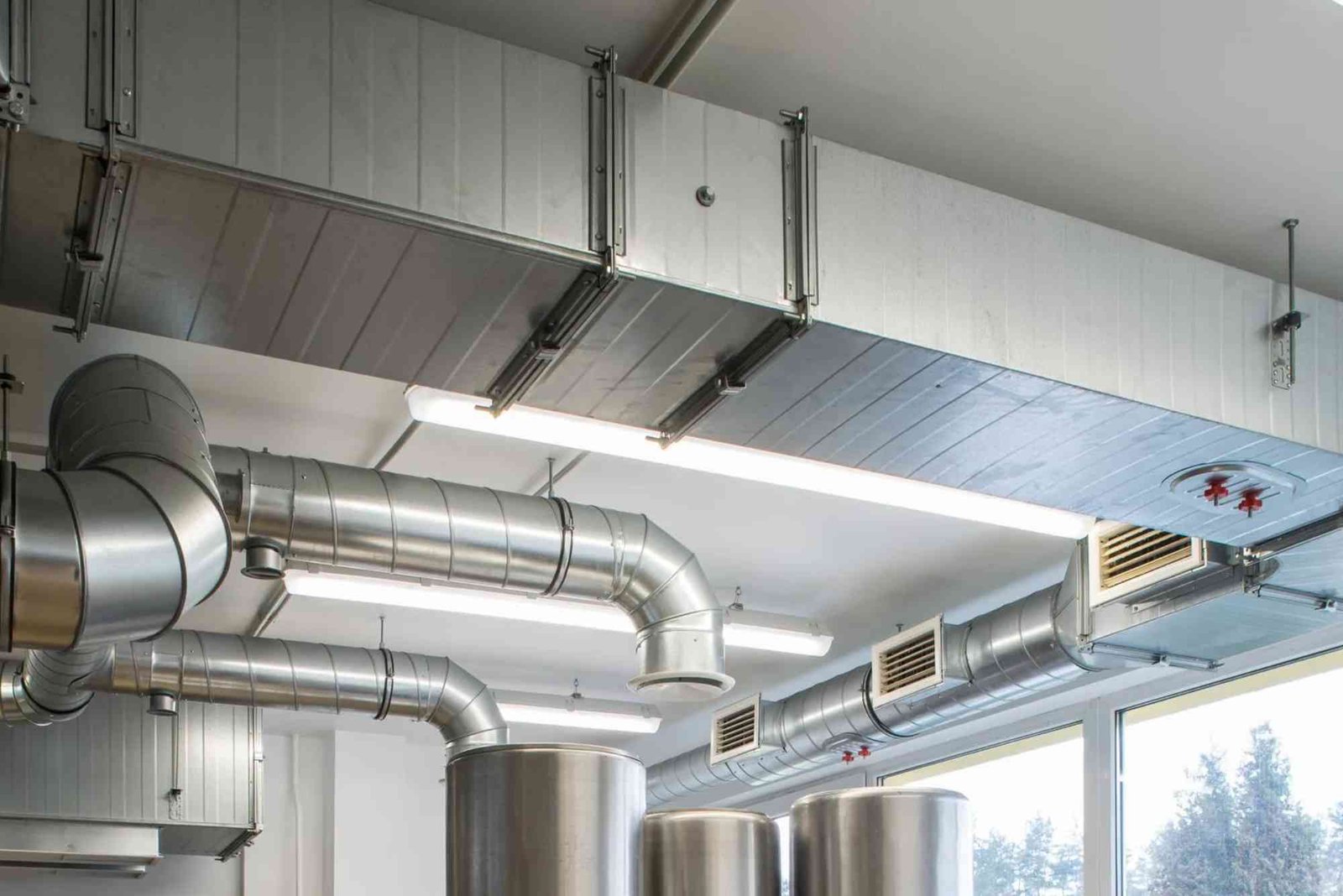
Introduction
Choosing the right air conditioner for a commercial building is a much bigger decision than simply selecting a unit with enough cooling capacity. Commercial properties have different layouts, occupancy levels, operating hours, equipment loads, ventilation requirements, and temperature-control needs. An office may require quiet and consistent cooling, while a retail store may need strong airflow across an open area. A restaurant, warehouse, clinic, or multi-storey building can have an entirely different set of requirements.
The right commercial air conditioner should provide reliable cooling without creating unnecessary energy costs or maintenance problems. A system that is too small may run continuously without achieving the desired temperature, while an oversized system can cycle inefficiently and create uneven comfort. Professional HVAC guidance consistently emphasizes building size, occupancy, layout, usage patterns, efficiency goals, and cooling-load calculations when selecting commercial equipment.
This guide explains how to choose the right air conditioner for a commercial building and what business owners, property managers, and facility teams should consider before making an investment.
Understand Your Commercial Building’s Cooling Requirements
Before comparing brands or models, start with the building itself. The right air conditioner depends heavily on how the property is designed and used.
Consider the Building Size
Floor area is an important starting point, but it should never be the only factor used to determine AC capacity. Ceiling height, insulation, windows, doors, building orientation, sunlight exposure, and the number of rooms can all influence the cooling requirement.
A large open-plan office may need a different design from a similarly sized building divided into small offices. Likewise, a warehouse with high ceilings can have very different airflow requirements from a retail showroom with large glass windows.

For this reason, professional cooling-load calculations are preferable to relying on simple square-footage rules. Load calculations account for multiple sources of heat entering or being generated inside the property.
Evaluate Occupancy Levels
People generate heat, so occupancy can significantly affect cooling demand. A small office with ten employees does not have the same requirements as a conference facility regularly accommodating fifty people.
Think about both average and peak occupancy. Meeting rooms, training areas, restaurants, gyms, classrooms, and retail spaces can experience major changes in occupancy throughout the day. Your air conditioner should be capable of handling realistic peak conditions rather than being selected only around average usage.
Identify Internal Heat Sources
Computers, servers, commercial lighting, machinery, refrigeration equipment, kitchen appliances, and other electrical devices can contribute substantial heat to a commercial environment.
A building containing large amounts of equipment may therefore require more cooling than its floor area alone suggests. If the property includes a server room or equipment area, that space may also require a dedicated cooling strategy rather than being treated like a normal office.
Choose the Right Type of Commercial Air Conditioner
There is no single commercial AC system that is ideal for every property. Different system designs offer different advantages in terms of capacity, zoning, installation, energy efficiency, and control.
Split and Multi-Split Systems
Split systems can be practical for smaller commercial premises or individual rooms. They generally require less extensive ductwork and can provide dedicated cooling to specific areas.
Multi-split systems extend this concept by connecting several indoor units to an outdoor unit. They can work well when a business needs independent temperature control across several rooms without installing a large centralized system.
They may be suitable for small offices, shops, cafés, reception areas, and similar spaces where flexibility is more important than centralized control.
Ducted Air Conditioning
Ducted systems distribute conditioned air through a network of ducts, making them suitable when a business wants consistent cooling across multiple areas.
They can provide a cleaner visual appearance because much of the equipment and distribution infrastructure is concealed. However, the ductwork needs to be properly designed, insulated, and maintained. Poorly designed or leaking ducts can reduce system efficiency and affect airflow.
For larger offices, retail properties, hospitality venues, and other buildings requiring whole-area cooling, a properly designed ducted system can be an effective option.
VRF or VRV Systems
Variable Refrigerant Flow systems are widely used where different zones require different levels of cooling. They can modulate refrigerant flow according to demand, allowing individual areas to be controlled more precisely.
This makes VRF particularly useful for multi-zone commercial properties, hotels, offices, and mixed-use buildings where rooms may have different occupancy schedules.
The ability to control zones can also reduce unnecessary cooling. Instead of conditioning every area at the same level throughout the day, the system can respond to actual demand.
Packaged and Central Systems
Larger commercial properties may require packaged rooftop systems, central air conditioning, chillers, or other high-capacity solutions. These systems can be appropriate for buildings with substantial cooling demands, but they require careful engineering and installation.
The best choice depends on the building’s size, mechanical infrastructure, available plant space, zoning requirements, and long-term operating objectives.
Get the Cooling Capacity Right
One of the most important decisions when choosing the right air conditioner for a commercial building is determining the correct capacity.
Avoid Undersizing
An undersized air conditioner may struggle during the hottest periods. It can run for long periods without reaching the desired temperature, increasing wear while still leaving occupants uncomfortable.
In a commercial environment, this can become a business problem. Employees may find the workplace uncomfortable, customers may spend less time in a retail environment, and temperature-sensitive equipment may be exposed to excessive heat.
Avoid Oversizing
Bigger is not automatically better. An oversized system may reach the thermostat setting too quickly and cycle on and off more frequently. This can waste energy and contribute to poor humidity control and uneven comfort.
The objective is not to buy the biggest available unit. The objective is to match capacity to the actual cooling load of the building.
Use a Professional Load Calculation
A qualified HVAC professional can assess factors such as building dimensions, insulation, glazing, solar exposure, occupancy, equipment, ventilation, and operating schedules.
This approach provides a much stronger basis for selecting equipment than using a generic tonnage-per-square-foot estimate. Commercial HVAC systems are affected by numerous variables, making detailed load calculations especially valuable.
Consider Energy Efficiency and Operating Costs
The purchase price is only one part of the cost of a commercial air conditioner. Because commercial systems can operate for many hours each day, electricity consumption can have a major effect on the property’s long-term expenses.
Look Beyond the Initial Price
A lower-cost unit may appear attractive initially, but a system with higher energy consumption or frequent maintenance requirements can become more expensive over its service life.
When comparing options, consider the expected electricity consumption, maintenance requirements, replacement parts, warranty coverage, installation quality, and anticipated lifespan.
A more efficient system may have a higher initial investment but offer better value over time when its operating costs are taken into account.
Consider Variable-Speed Technology
Variable-speed compressors and fans can adjust output according to demand rather than operating only at full capacity. This can improve temperature stability and efficiency in suitable applications.
For buildings with varying occupancy throughout the day, variable-capacity operation can be particularly useful because the system can respond more closely to actual cooling requirements.
Think About Zoning and Temperature Control
Different areas of a commercial building rarely have identical cooling needs.
A conference room may be occupied for only a few hours a day. A server room may need continuous cooling. A reception area may receive frequent visitors, while a storage room may require very little conditioning.
Zoning allows different areas to be controlled independently. This can improve comfort while preventing the building from using energy to cool unoccupied spaces.
Modern commercial systems may also support centralized controls, scheduling, remote monitoring, and integration with building management systems. These features can become increasingly valuable as the size and complexity of the property increase.
Consider Indoor Air Quality and Ventilation
Cooling alone does not guarantee a comfortable commercial environment. Ventilation, filtration, humidity control, and airflow also influence indoor conditions.
Different businesses may have different ventilation requirements. Restaurants, gyms, healthcare environments, workshops, and densely occupied offices may have substantially different air-quality needs from a small administrative office.
Your HVAC designer should therefore consider outdoor-air requirements, filtration, return-air arrangements, humidity, and airflow distribution alongside cooling capacity.
An air conditioner should not simply make the room colder; it should contribute to a properly designed indoor environment.
Assess Noise Levels
Noise is an important consideration for offices, hotels, clinics, educational facilities, meeting rooms, and customer-facing businesses.
An AC system that produces excessive noise can become a distraction even when its cooling performance is excellent. Indoor unit selection, fan operation, equipment location, vibration control, and duct design can all influence perceived noise.
Discuss noise expectations with the HVAC contractor before installation, especially in areas where concentration, communication, or customer experience is important.
Plan for Installation and Maintenance
Even the best commercial air conditioner can perform poorly if installation is rushed or incorrectly designed.
The installation should account for refrigerant piping, electrical requirements, drainage, airflow, equipment access, outdoor-unit positioning, ductwork, insulation, and commissioning.
Maintenance should also be considered before purchasing the equipment. Filters, coils, drains, electrical components, fans, refrigerant circuits, and controls all need appropriate inspection and servicing.
Commercial systems often operate for long hours, so a planned maintenance program can help identify developing problems before they cause expensive downtime. Some commercial HVAC providers recommend servicing every three to six months depending on system complexity and operating conditions.
Choose a Reliable Supplier and Installer
The supplier you choose can influence the long-term performance of your commercial cooling system.
A reputable supplier should be able to provide suitable equipment, technical specifications, warranty information, replacement parts, and after-sales support. Installation should be carried out by qualified professionals who understand commercial HVAC requirements.
If you are sourcing equipment for a UAE commercial project, you can explore options through an O General ac Supplier for product and supply-related requirements.
For projects requiring equipment or support in Abu Dhabi, an O General ac abu dhabi provider can also be considered when evaluating suitable commercial cooling solutions.
The important point is to evaluate the complete service, not just the equipment price. Good technical advice, proper installation, responsive maintenance, and access to parts can make a substantial difference over the life of the system.
Consider Future Business Growth
Your commercial building may not operate the same way five years from now.
You may add employees, convert rooms into offices, expand a retail area, install additional equipment, or change the use of part of the property. A system designed without future requirements in mind may eventually become difficult or expensive to expand.
During the planning stage, discuss possible future modifications with your HVAC professional. A scalable design can provide greater flexibility and help avoid replacing equipment prematurely.
Compare Total Cost of Ownership
When choosing the right air conditioner for a commercial building, look beyond the quotation price.
The total cost of ownership includes equipment, installation, electricity, preventive maintenance, repairs, replacement components, and eventual replacement. A system that costs slightly more initially may be the better investment if it delivers reliable performance with lower operating and maintenance expenses.
This is particularly important for businesses where cooling is essential to daily operations. A reliable HVAC system can help protect productivity, customer comfort, equipment, and business continuity.
Why Professional Assessment Matters
Commercial air conditioning is a technical investment. Online calculators and basic rules of thumb can provide general information, but they cannot replace an assessment of the actual building.
A professional evaluation can identify cooling loads, airflow requirements, zoning opportunities, installation constraints, electrical requirements, and maintenance considerations before equipment is purchased.
It also reduces the risk of selecting a system that appears suitable on paper but performs poorly once installed.
Choosing the right air conditioner for a commercial building requires more than comparing cooling capacities and prices. Building size, occupancy, heat-generating equipment, layout, ventilation, zoning, energy efficiency, noise, installation requirements, maintenance, and future expansion all need to be considered.
In today’s digital world, finding reliable information and useful online resources is essential. Whether you are exploring helpful insights, discovering new ideas, or staying updated with interesting content, quality websites can make the search easier. For more valuable information and engaging resources, visit Naam Nuqta and explore the latest content available on the platform.
FAQs
How do I choose the right air conditioner for my commercial building?
Start by assessing the building’s size, layout, occupancy, operating hours, heat-producing equipment, insulation, windows, ventilation, and zoning requirements. A professional cooling-load calculation can then determine the appropriate capacity and system design.
What size air conditioner do I need for a commercial building?
There is no universal AC size based only on floor area. The required capacity depends on factors such as building dimensions, occupancy, solar exposure, insulation, windows, equipment, and ventilation. A professional load calculation is the safest way to determine the required capacity.
What type of air conditioning is best for a commercial building?
The best system depends on the property’s size and usage. Split systems can suit smaller spaces, while ducted, packaged, VRF, or centralized systems may be more appropriate for larger or multi-zone buildings.
Are VRF systems suitable for commercial buildings?
Yes. VRF systems can be particularly useful for commercial buildings with multiple zones because they allow refrigerant flow and cooling output to respond to individual zone requirements.
How often should a commercial air conditioner be serviced?
Service frequency depends on the equipment, operating hours, environment, and manufacturer’s requirements. Many commercial HVAC systems benefit from inspections and maintenance several times per year, particularly where equipment operates heavily.
Is a bigger commercial AC unit always better?
No. Oversized equipment can cycle inefficiently and may provide poorer humidity and temperature control. Correct sizing based on an actual cooling-load assessment is more important than simply choosing a larger unit.
How can a commercial air conditioner reduce energy costs?
Energy consumption can be reduced through appropriate sizing, efficient equipment, zoning, variable-capacity operation, effective controls, proper installation, and regular maintenance. Keeping the system clean and correctly maintained also helps preserve efficiency over time.
Related Reading: وصفات سريعة: طريقة سهلة وفعالة
Related Reading: O General AC Supplier in Sharjah for Bulk Orders